Fall Wedding Flowers in New England: A Florist's Guide to Foliage Season Weddings
The short version: Fall wedding flowers in New England feature seasonal blooms like dahlias, garden roses, and chrysanthemums in palettes that complement the autumn foliage — burgundy, rust, copper, mustard, and dusty mauve. Peak fall wedding season runs mid-September through late October, and the best florals get booked 9 to 12 months ahead.
There's a reason couples fly in from across the country for fall weddings in New England. The foliage season here isn't just beautiful — it's iconic. Maples in the Berkshires, sugarbushes in Vermont, the whole region lighting up for about three weeks straight. The New England fall is a once-a-year canvas, and your wedding florals are the part you actually get to design.
After years of designing fall weddings across Western Massachusetts, Connecticut, and the Berkshires, I put this complete guide together. Whether you're planning a September wedding when the leaves are just starting to turn or a late-October celebration when the foliage is fully on fire, this walks you through what's in season, what palettes work, and what to ask your florist before you book.
Why Fall Is the Best Season for New England Weddings
The natural backdrop is half the reason. Foliage is built-in décor — you don't need to spend a dollar to have a stunning ceremony backdrop when the trees are doing what they do. We've designed fall weddings where the "ceremony arch" was literally just a clearing between two old maples, and the photos were unreal.
The weather works for you too. Cool but not cold, low humidity, and the kind of dramatic golden light that makes every photo look editorial. Flowers stay fresh longer in fall temps. Guests are comfortable in actual outerwear instead of melting in July humidity. Everybody's in a better mood.
And the local flower farms hit peak production in September. Pioneer Valley growers are pulling dahlias by the armload, garden roses are at their best, the foraged stuff is everywhere. We're not flying things in — we're driving 20 minutes to pick them up.
One catch: fall books out fastest of any season. Popular venues and florists fill 12-plus months ahead, sometimes more. If your dream date is the second Saturday of October, you needed to start asking around basically the day after you got engaged. Heads up.
The Best Flowers for Fall Weddings in New England
Here's what we actually use in our fall designs. Most of it sourced locally from Pioneer Valley and Connecticut River Valley farms.
- Dahlias — The undisputed star. Available in every color, every size, from tiny ball dahlias to dinner-plate showstoppers. Locally grown peaks September through October.
- Garden roses — David Austin varieties work in any palette. Romantic, lush, and they hold up beautifully in cool fall air.
- Chrysanthemums — Don't sleep on these. Heirloom varieties (spider mums, Football mums) are nothing like the grocery-store version. They're stunning.
- Lisianthus — Soft, ruffled, romantic. Great for filling out bouquets and centerpieces without overpowering them.
- Amaranth (cascading and copper) — Adds dramatic trailing texture, especially in copper or burgundy. The single best move for a cascading bouquet.
- Hypericum berries — Tiny pops of color that mimic seasonal harvest fruits. Subtle but they add a lot.
- Scabiosa pods — Architectural, dried-looking, perfect for fall texture. Inexpensive too.
- Sedum — Adds rustic, harvest-toned filler. Lasts forever.
- Seeded eucalyptus and ruscus — Workhorse foliage that flatters any fall palette.
- Branches and dried elements — Wheat, pampas (used sparingly, please), bittersweet, dried hydrangea. The texture players.
Color Palettes That Match the New England Foliage
The trick with fall palettes is choosing one that complements the foliage outside instead of competing with it. A few we keep going back to:
Classic New England Fall
Burgundy, rust, copper, deep gold, sage. Pairs beautifully with stone walls, barn beams, and any rustic venue. The default for a reason.
Moody Romantic
Black-burgundy, plum, mauve, dusty rose, slate green. Photographs dramatically and feels editorial. Especially good for evening receptions where candlelight does half the work.
Soft Autumn
Terracotta, peach, cream, sage, blush. The "anti-rust" fall palette — still seasonal but lighter and airier. A favorite for couples who love fall but don't want their wedding to read Halloween.
Harvest Earth
Mustard, ochre, rust, brown, mossy green. Earthy and grounded, perfect for farm or vineyard weddings. Looks incredible at orchard venues.
White & Foliage Drama
All-white florals against rich green and copper foliage. Sophisticated and lets the foliage be the actual color story. Underused.
| Palette | Best For | Key Blooms |
|---|---|---|
| Classic New England | Barn / rustic venues | Burgundy dahlias, copper amaranth, sage |
| Moody Romantic | Evening / candlelit receptions | Black dahlias, plum roses, dusty mauve |
| Soft Autumn | Couples avoiding "Halloween" tones | Peach roses, terracotta, cream |
| Harvest Earth | Farm / vineyard / orchard | Ochre dahlias, rust, mustard |
| White & Foliage | Modern / editorial weddings | White anemones, ivory roses, deep greens |
Bridal Bouquet Inspiration for Fall New England Weddings
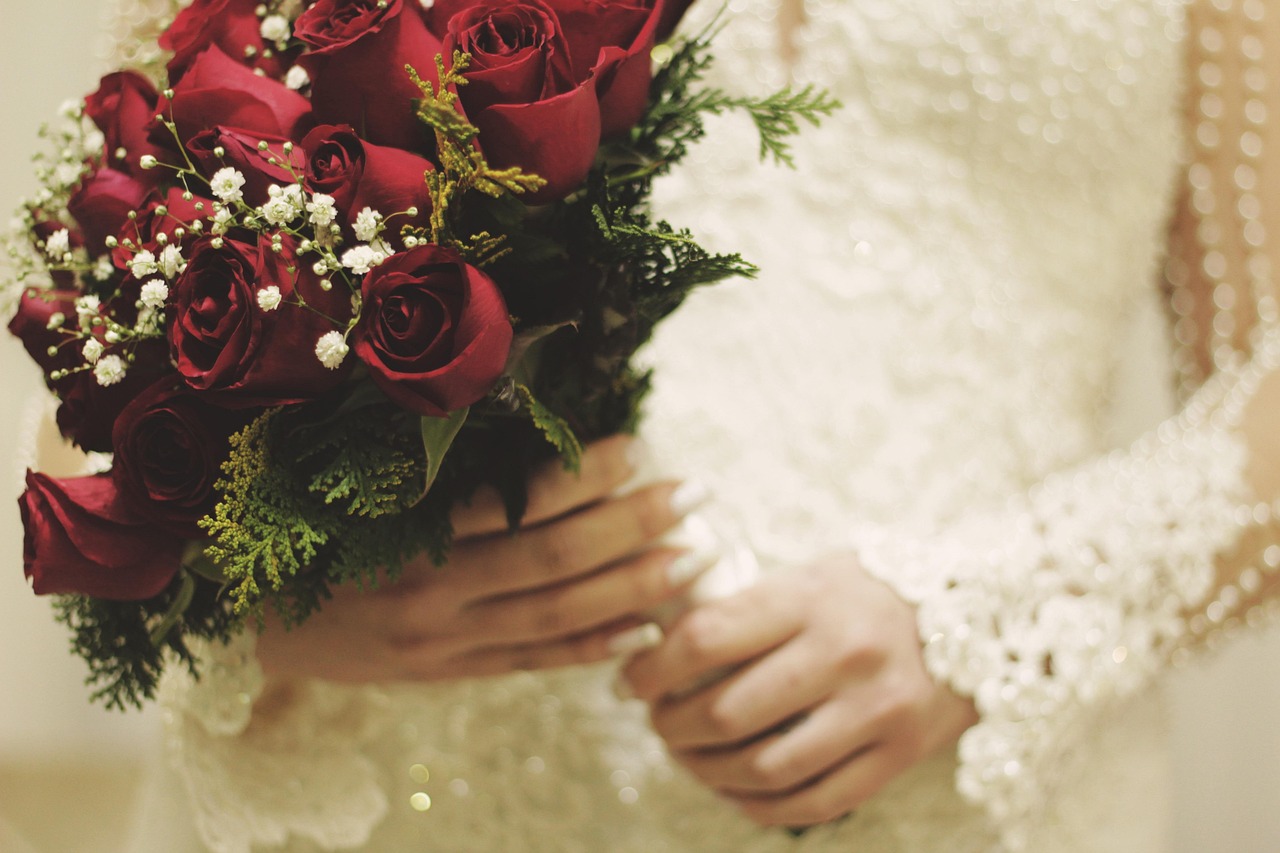
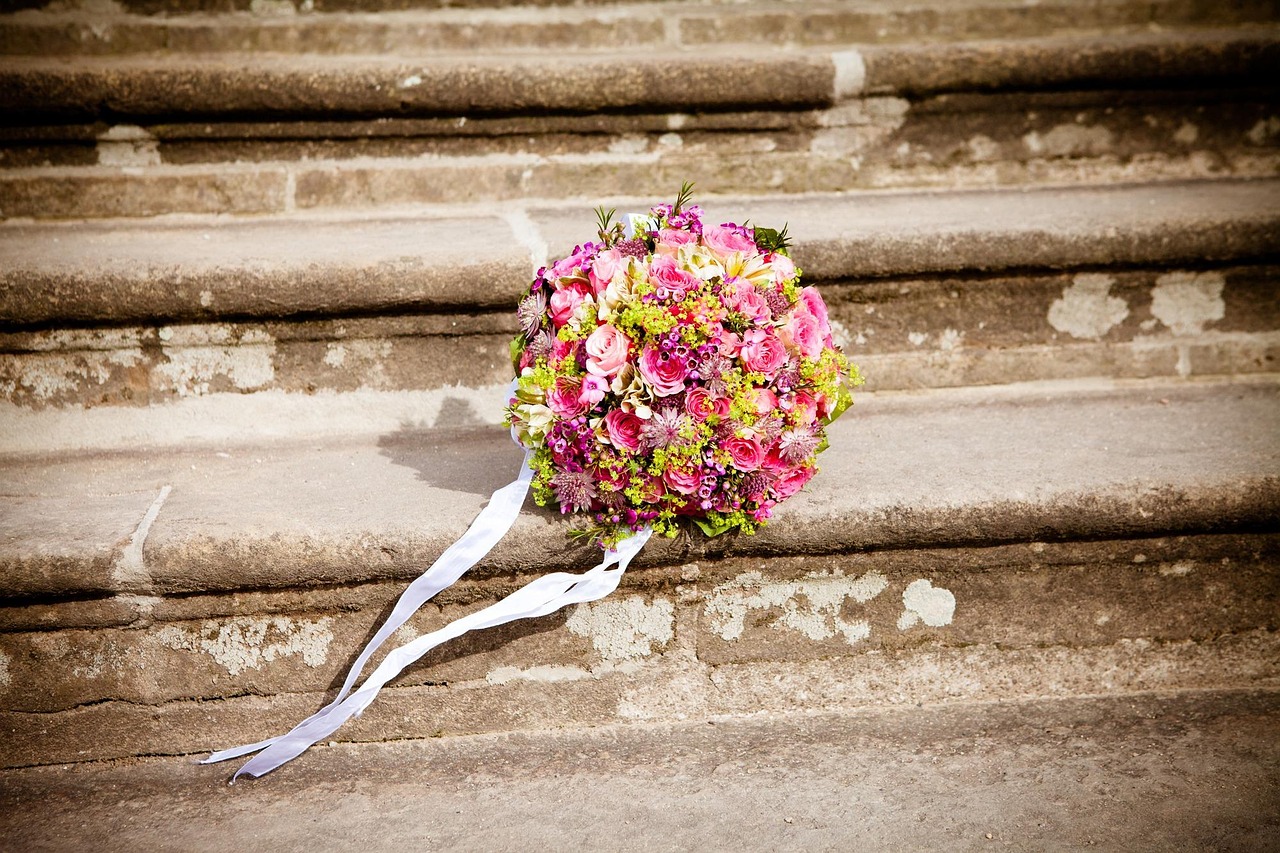
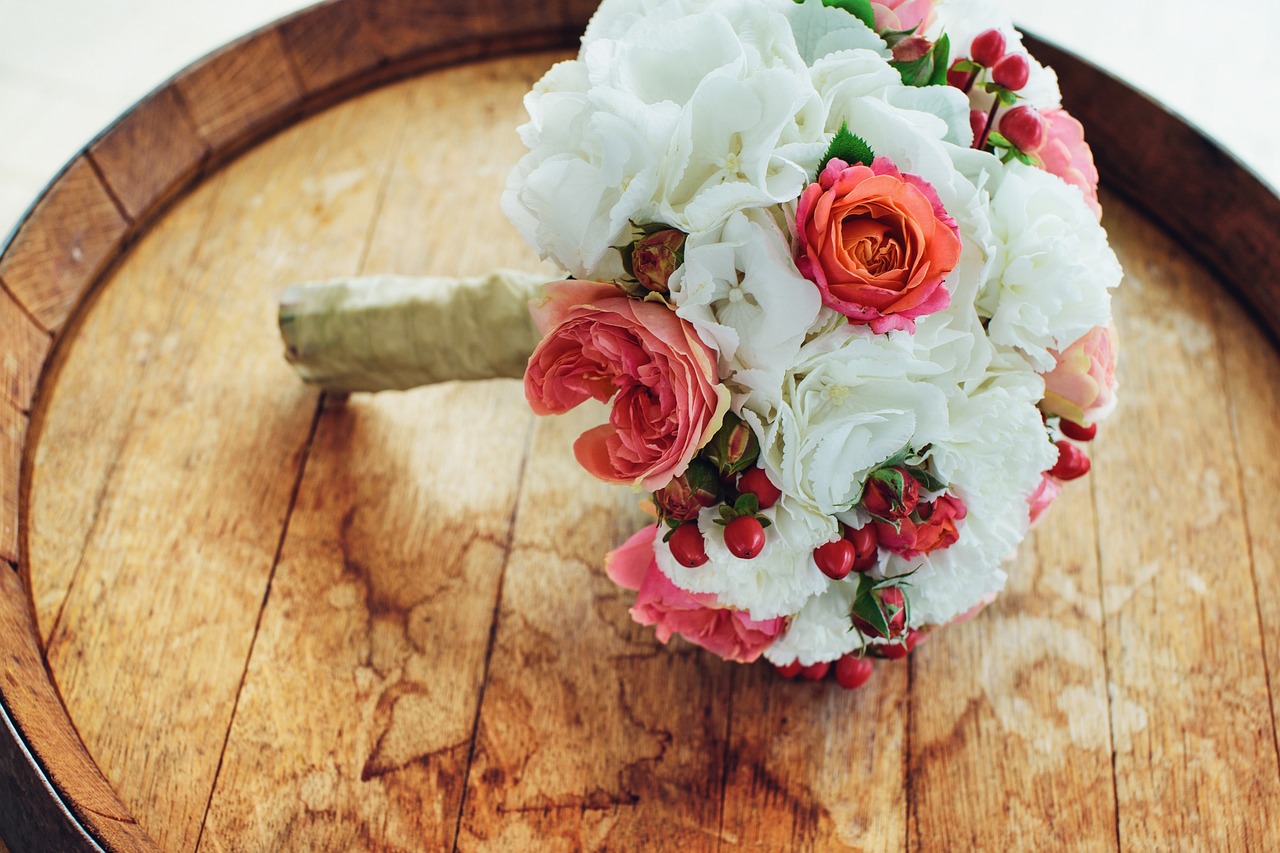
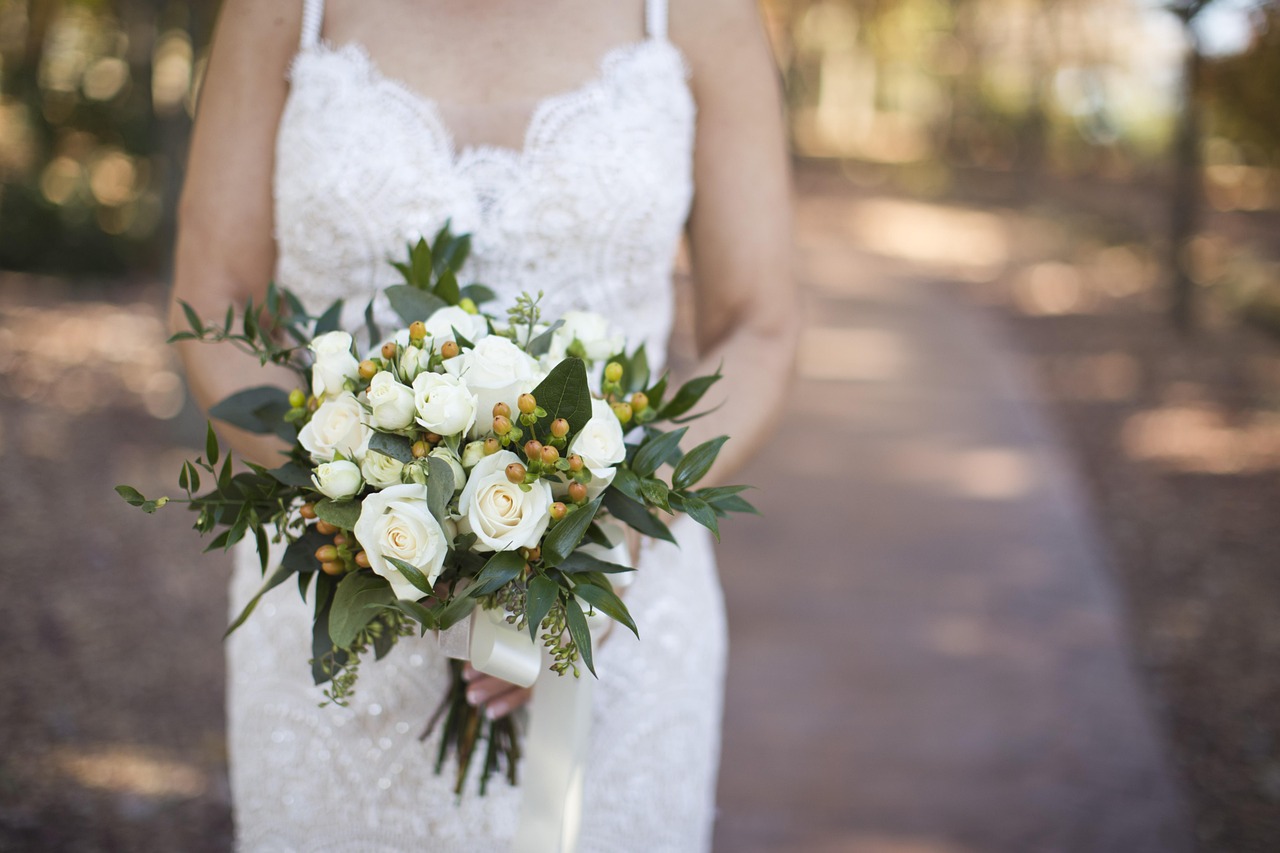
Lush garden-romantic bouquets are the most-requested style we do in fall. Dahlias and garden roses, mixed textures, trailing greenery, asymmetrical silhouette — the kind of bouquet that looks like you grabbed it from a wild garden on the way to the ceremony. Works with almost any dress style and every venue type. If you only know one thing about what you want, this is the safe bet.
Then there's the minimalist modern direction: a few focal blooms, intentional negative space, a clean color story, often monochromatic. Stunning with sleek dresses or anything architectural. Photographs beautifully against simple backdrops, and tends to feel current rather than trendy.
And cascading bouquets are having a real moment again. Trailing amaranth, jasmine vine, smilax — the whole bouquet flowing downward dramatically. They photograph incredible at outdoor ceremonies, especially against fall foliage. Best paired with longer dresses where the bouquet has visual room to extend without throwing off proportions.
Reception Centerpiece Ideas for Fall Weddings
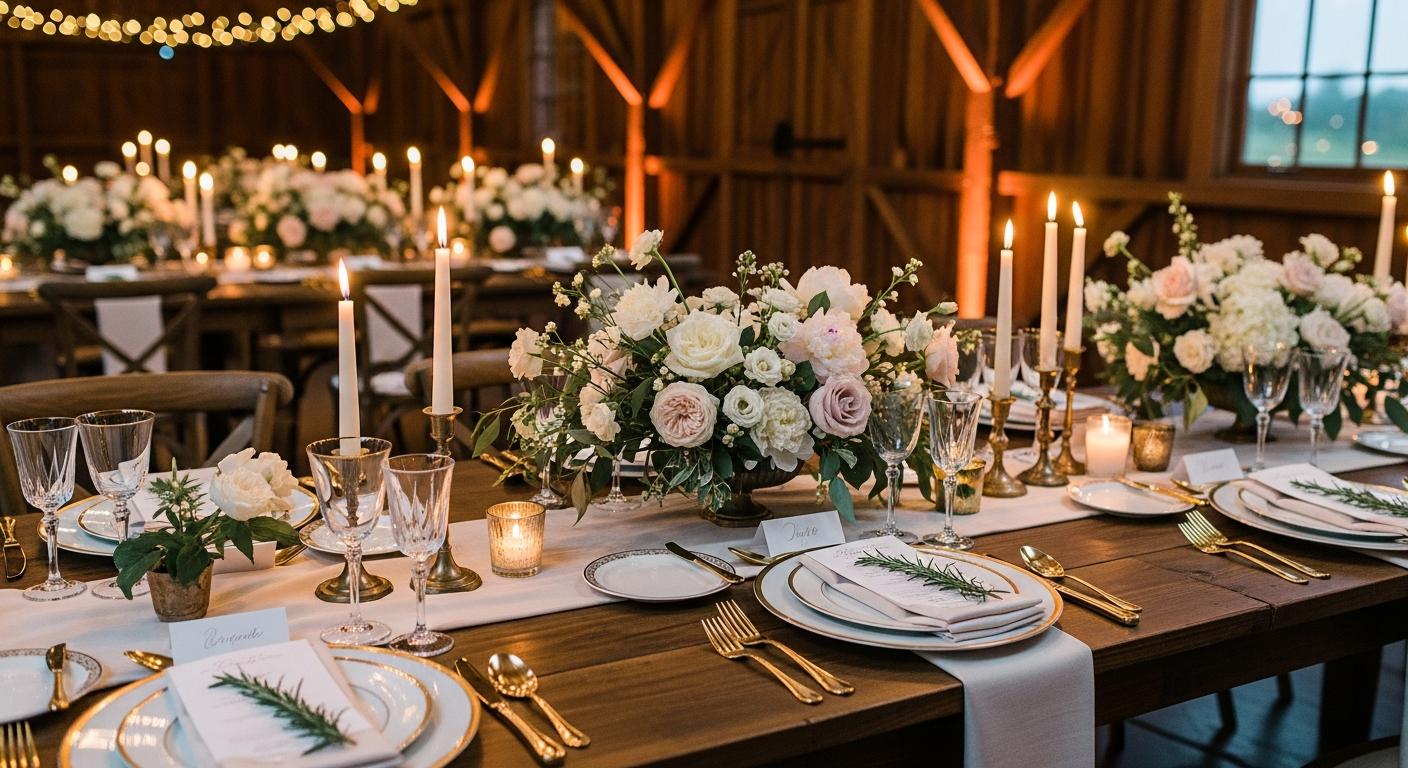
- Lush low compotes — Dahlias overflowing in low brass or ceramic vessels. Ideal for guest interaction at long tables since nobody's craning around a tall arrangement.
- Tall pillar arrangements — Dramatic for ceiling-height venues. Let trailing amaranth cascade down the sides. Big visual impact.
- Footed bowl centerpieces — A favorite for fall. Slightly elevated, lush, and they photograph beautifully from any angle.
- Tablescape installations — Long runners of greenery and seasonal blooms for farm-table receptions. Looks like you set the table inside a garden.
- Candle-and-bud-vase clusters — Budget-friendly approach: low candles with single-stem bud vases of fall blooms. Surprisingly impactful for the cost.
- Foraged elements — Branches, dried hydrangea, foliage clippings mixed with fresh blooms. Adds texture you can't buy.
Ceremony Arch & Aisle Design for Fall New England Weddings
Outdoor fall ceremonies in New England have a built-in advantage: you often don't need a giant arch. The trees are doing the work. Some of our favorite ceremony shots are minimal arrangements at the altar with the foliage exploding behind the couple. Let the landscape carry the visual weight.
That said, when you do want to invest in a statement arch, it's worth it. Tented receptions, indoor venues, and any space that needs a strong photo focal point benefit from a substantial floral install. We design fall arches to feel abundant but uncalculated — asymmetrical compositions, trailing elements, foraged accents. Nothing too rigid. Symmetry doesn't really suit the season.
For aisle design, simple usually wins. Petal scatter in fall tones, lined arrangements at the end of the aisle (not every row — that gets cluttered), or the occasional hanging installation if your venue allows it. The aisle is a transition; you don't need to over-design it.
When to Book Your Fall New England Wedding Florist
For peak fall (mid-September through late October), book 12 to 14 months ahead. Boutique florists take a limited number of weddings per weekend, and fall is the most contested season of the year. The good ones close out their fall calendars first, often before any other season.
Late October and November sit in off-peak fall territory and are more flexible — 6 to 9 months out usually works. The trade-off is foliage. Late October you're past peak in most of the region, so the trees aren't doing as much heavy lifting. The florals have to carry more weight. Not a problem, just something to plan for.
Common Mistakes to Avoid with Fall Wedding Flowers
- Over-relying on pumpkins and squash. It looks dated and trends Halloween, not wedding. Skip.
- Ignoring foliage. In New England, foliage is half the story. Lean into it instead of pretending you're getting married in July.
- Choosing imported tropicals. Birds of paradise at a Berkshires wedding fights the entire seasonal aesthetic. Stay regional.
- Booking too late. Fall florists book first. Don't wait until 6 months out and expect options.
- Forgetting about light. Fall light is golden and warm. Choose flowers that read well in warm tones — pure cool blues and icy whites can look strange in October sun.
- Neglecting backup plans. New England weather is unpredictable in fall. Outdoor ceremonies need a tented or indoor backup, and your florist needs to know about it from day one so the design works in either space.
Why Couples Choose Evergreen Events for Their Fall New England Wedding
Fall is our favorite season to design, and it shows in our work. We've built sourcing relationships with Pioneer Valley flower farms over years — the growers we work with text us when their dahlias are about to peak, when the bittersweet vine is ready to forage, when something unusual comes in. That kind of network doesn't exist for florists who parachute into the region for one wedding.
And the boutique model genuinely matters in fall. We take a limited number of weddings per fall weekend on purpose. That's the whole point. Every couple gets the lead designer (me), full attention through planning, and a team that's not stretched across four other events on the same Saturday.
If you're looking for broader regional context, our Western Massachusetts wedding florist guide covers the basics, and the Berkshires wedding florist guide goes deeper on mountain venues. See our fall wedding gallery for a sense of how this all comes together in real weddings.
Frequently Asked Questions
When is peak fall wedding season in New England?
Peak fall in New England runs from mid-September through late October. Foliage typically peaks the second and third weeks of October in Western MA, the Berkshires, and Vermont. Coastal areas peak slightly later.
What are the best fall wedding flowers for New England?
Dahlias, garden roses, chrysanthemums (the heirloom varieties), lisianthus, amaranth, hypericum berries, scabiosa pods, and seasonal foliage like seeded eucalyptus, ruscus, and dried hydrangea. Local availability is excellent through October.
How much do fall wedding flowers cost in New England?
Fall is peak season, so floral budgets reflect that. Most full-service fall weddings in New England run $5,000 to $15,000, with Berkshires and luxury weddings often $15,000 and up.
When should I book my florist for a fall New England wedding?
Book 12 to 14 months ahead for peak fall (mid-September through late October). Boutique florists take a limited number of weddings per season, and fall fills first.
Can I have a fall wedding without using oranges and rusts?
Absolutely. Dusty mauve, blush, sage, and cream all work beautifully against fall foliage. The "soft autumn" palette is increasingly popular for couples who love fall but don't want the Halloween-adjacent look.
Planning a Fall Wedding in New England?
Evergreen Events books a limited number of fall weddings each season so every couple gets the personal, hands-on experience they actually deserve. If you're planning a 2025 or 2026 fall wedding in Western MA, CT, or the Berkshires, reach out soon — fall dates fill faster than any other season.
Check your date with us — let's see what we can build together.
Written by Kristina, founder of Evergreen Events — designing wedding florals across Western Massachusetts, the Berkshires, and Connecticut.